 » University Archives & Special Collections
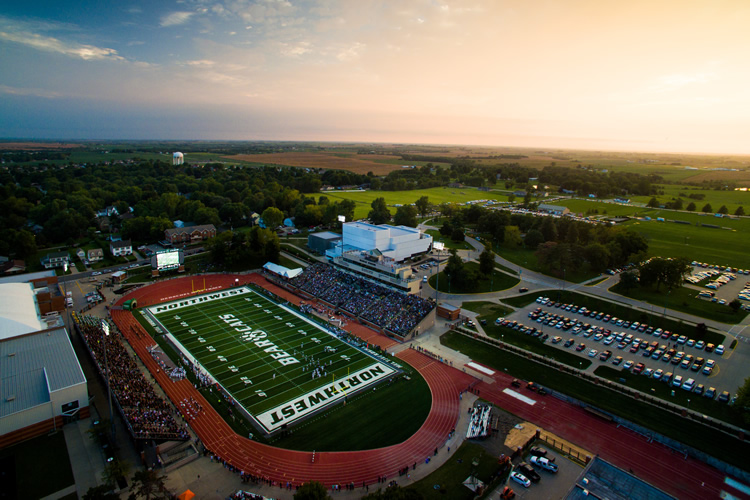
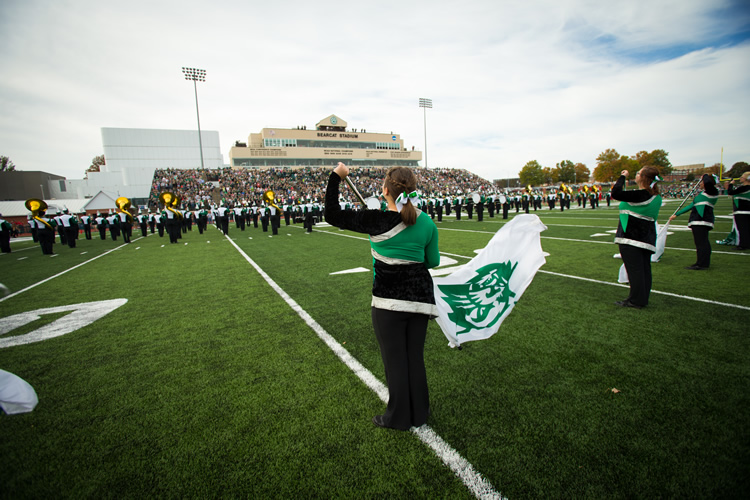
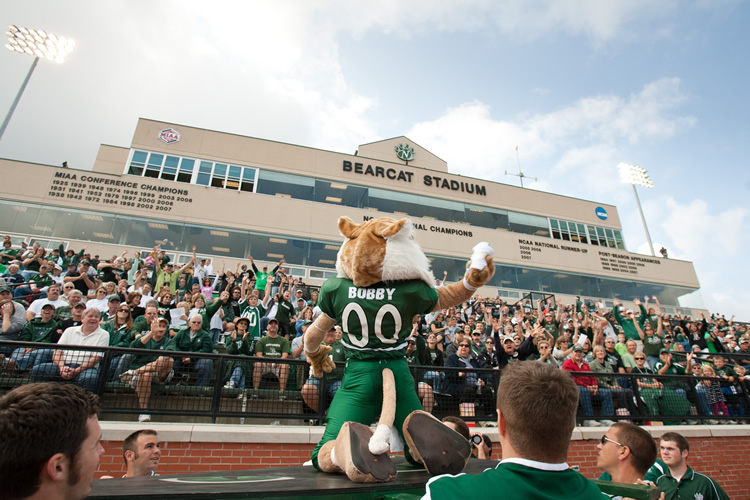
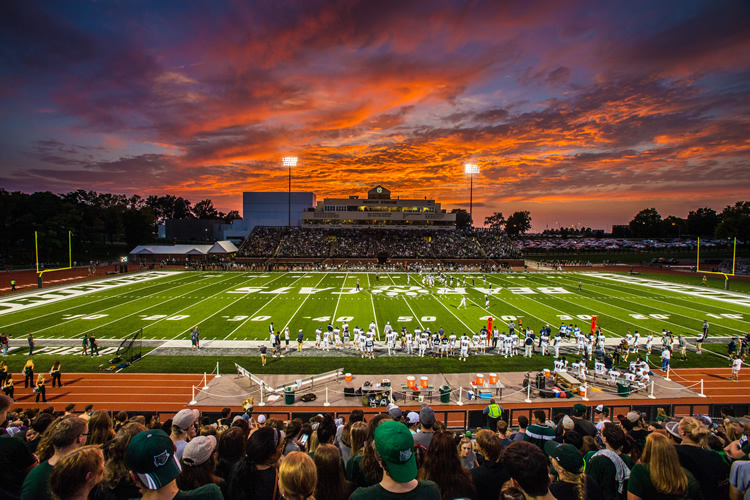
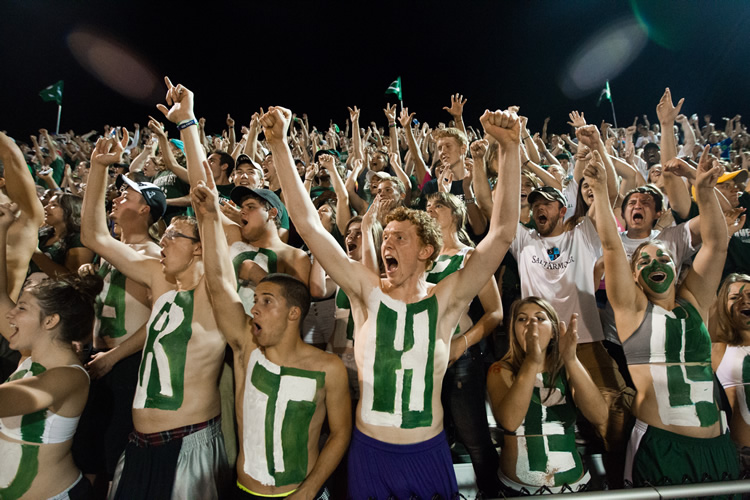
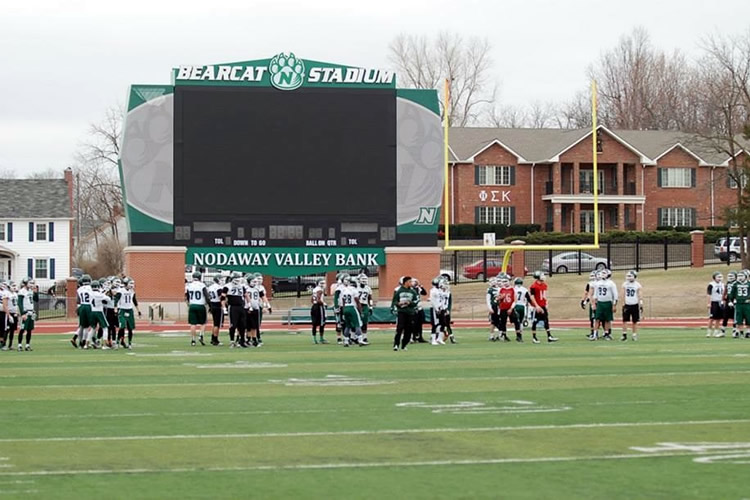
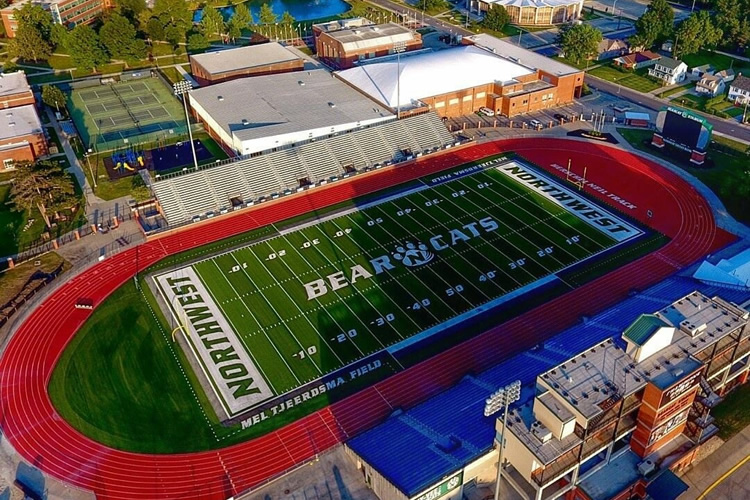
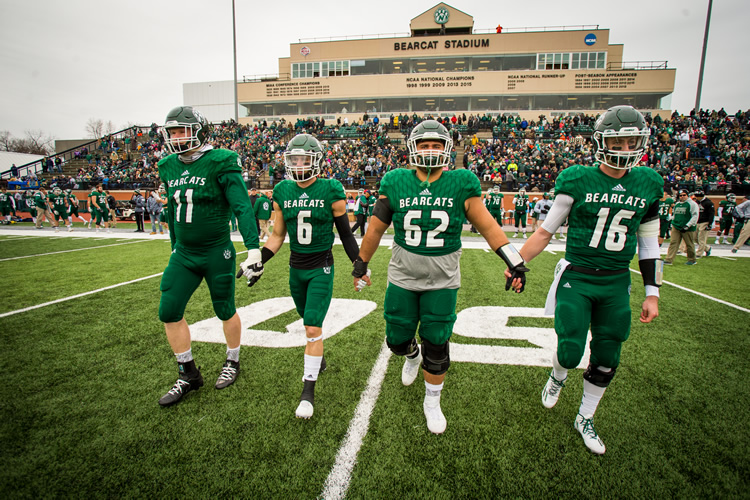
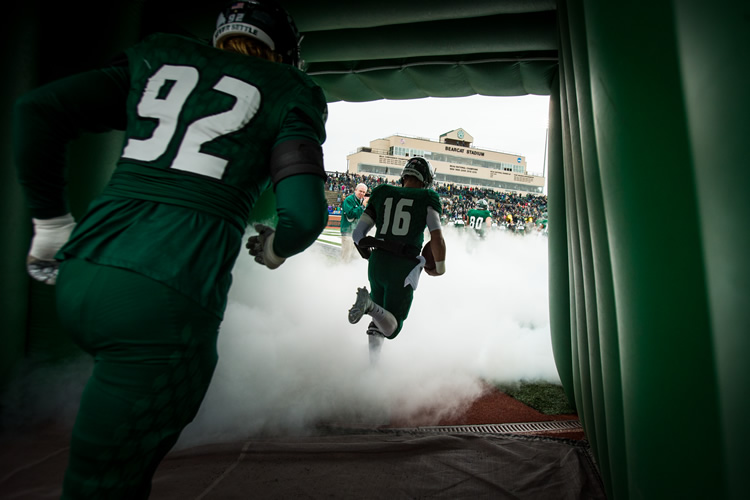
Bearcat Stadium is the home to Northwest’s football and track and field teams and has been called “the crown jewel of the MIAA” by The Kansas City Star.
The Bearcats’ athletic field and track were initially located north of the Administration Building, in the vicinity of today’s Garrett-Strong Science Building.
After more than a decade of planning and work, construction was completed on a new field at the base of a slope southwest of the Administration Building, and the Bearcat football team played its first game on the field of what is now Bearcat Stadium on Sept. 19, 1930. The game, played on a Friday night under new lighting, also has the distinction of being the first night football game at Northwest.
The athletic field was named Memorial Stadium in 1949 and then was Rickenbrode Stadium, in honor of longtime registrar and secretary to the Board of Regents William A. Rickenbrode, from 1961 until 2004, when it took its current name in honor of all Bearcat fans.
In 2000, the first of a wave of major changes to the stadium took place. The east grandstand was completely rebuilt through funding from Northwest students. After the 2001 season, demolition of the west grandstand and construction of a modern, much larger grandstand began. The Bearcats played the 2002 season with temporary bleachers and a temporary seating area for media. In 2003, the new-and-improved stadium was unveiled with chairback and railback seating, 10 luxury suites, a spacious and functional press area, and a new scoreboard with video capability. The stadium has a seating capacity of 6,500, with room for thousands more near the end zones.
On Dec. 10, 2006, Bearcat Stadium hosted an NCAA Division II Semifinal Football game between Northwest and Bloomsburg (Pa.), marking the first night game at the stadium since 1977. The game also was nationally televised by ESPNU, making it the first national broadcast by an ESPN network from a MIAA site in conference history.
In 2007, renovations began on the field to upgrade the natural turf surface to synthetic turf and the return of lights for the first time since the stadium’s previous lighting was removed before the 1978 season. Switching to synthetic turf and adding lights allowed the University to open the field to a variety of activities year-round. With unanimous approval by the Board of Regents, the new field also was named “Mel Tjeerdsma Field” – to go with the Herschel Neil Track that surrounds the field and was named in 1978 to honor the Bearcat track and field standout of the 1930s.