Program(s) Available: B.A., B.S., B.S.Ed.
Are you wondering how to decide which science degree is right for you? Northwest Missouri State University’s sciences meta major helps you compare different types of science majors while staying on track toward graduation. Through coursework in key areas of the natural sciences and support from a dedicated academic advisor, you can learn more about Northwest’s science degrees and begin narrowing your choices.
Office of Admissions
800 University Drive
Maryville, MO 64468
660.562.1562
admissions@nwmissouri.edu

Northwest’s meta major groups together related programs in the natural sciences for students who are still deciding which area of science they want to study. Instead of choosing a major right away, you begin with coursework that applies across multiple programs and introduces how different science fields connect.
This approach gives you time to compare majors in science, build a stronger understanding of the field and move toward a decision without losing momentum toward graduation.
At Northwest, you’ll begin with courses that are common across several science majors in the School of Natural Sciences. These classes introduce key areas of the natural sciences and help you see how different subjects relate to one another. As you complete this coursework, you can start paying closer attention to the topics, lab work and scientific questions that interest you most.
Early coursework may include:
Through these courses, you can start to discover whether you are more drawn to biological, environmental, earth or laboratory-based study.
If you begin college as an undeclared major but know you’re interested in science, Northwest’s meta major allows you to study different areas of the field. From biology and chemistry to geology, physics, data science and health-focused sciences, you can compare the different types of science majors while learning which option best fits your interests. Starting in the sciences meta major gives you time to build knowledge across the natural sciences, learn what each program prepares you to do and think more carefully about the topics, lab work and real-world applications that interest you most. As you complete foundational coursework and meet with your advisor, you can begin identifying the science degree that fits your interests and career goals.
The majors in science at Northwest include:
You can learn more about each of these programs below.
If you’re interested in living systems, human health and the science behind how organisms and the body work, Northwest offers several science majors focused on biology and biomedical study.
These science degrees prepare students for a range of opportunities in biological research, health care, science education and advanced study in health-related fields.
If you’re interested in chemical reactions, laboratory work and understanding what matter is made of, Northwest offers science majors focused on chemistry and chemistry education.
These degrees in science prepare students for opportunities in laboratory science, scientific research, science education and advanced study in chemistry-related fields.
If you’re interested in health care, patient care and the science behind diagnosis and treatment, Northwest offers several science majors focused on clinical and imaging sciences.
Through these different types of science degrees, students can prepare for a variety of opportunities in health care, clinical settings and diagnostic science.
If you're interested in the Earth, marine ecosystems, wildlife and the natural environments that support life, Northwest offers several science degrees focused on earth and environmental study.
Through these various types of science degrees, students are prepared for opportunities in environmental work, conservation, field and laboratory science, and science education.
If you’re interested in how the physical world works, how data can be used to solve problems, or how science and technology connect in new ways, Northwest offers several science majors focused on physics, data science and emerging scientific fields.
These majors in science prepare students for opportunities in research, technology, scientific analysis, data-focused careers and science education.
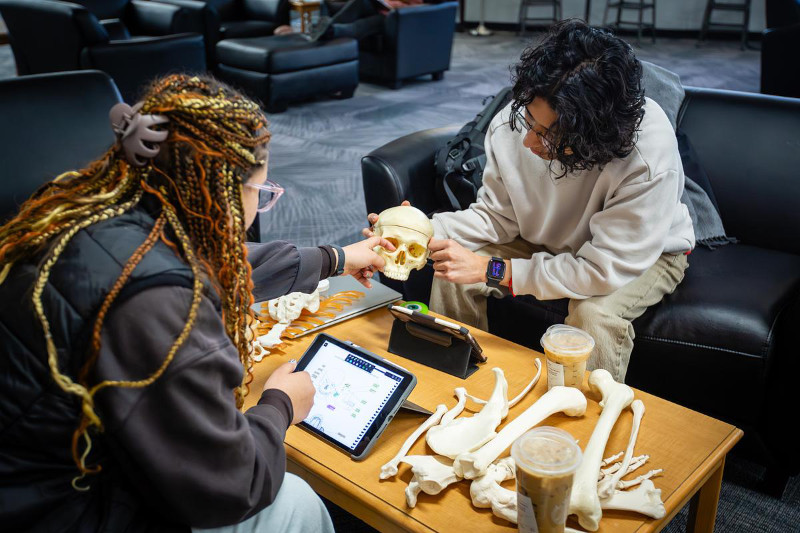
Northwest also offers several pre-professional programs for students who want to build a strong science foundation before applying to professional school. These options can help you prepare for advanced study in health care, technical and other specialized fields.
Northwest helps you move from an undecided major to a more defined direction in science through personalized guidance, faculty connection and opportunities to learn more before choosing a program. The meta major gives you time to compare different areas of science, meet with an advisor who works specifically with students who are still deciding and see how different types of science majors connect to careers, graduate study and professional programs. As you learn more about the field, you can begin identifying the science degree that best fits your interests and goals.
Northwest helps you make an informed decision through:
You’ll meet one-on-one with an academic advisor who works specifically with students who have not yet declared a major. In these meetings, you can talk through your interests, review course options and compare the types of science majors available at Northwest as you decide which science degree makes the most sense for your goals.
You can connect with faculty in the School of Natural Sciences during weekly office hours that are open to all students. These conversations give you the chance to ask questions about different scientific fields and learn how faculty experience relates to research, graduate school and careers in science.
Northwest offers resources that help you learn more about careers connected to different science degrees. Through tools such as TalentDesk, Vault Career Intelligence and the “Deciding to Decide” Canvas site, you can research job responsibilities, reflect on your interests and learn more about the day-to-day work connected to jobs in science.
Are you asking, “What career options do I have with a science degree?” Career Services at Northwest offers resources and programs that can help you connect your interests in science to future opportunities. Through events such as Career Day, Meet the Pros and Exploring Majors and Minors, you can learn more about careers connected to science majors. Northwest also offers free assessment tools, internships and other opportunities to clarify your goals.

You don’t need to have every detail figured out before starting college. If you are interested in science but still deciding where to focus, Northwest’s sciences meta major gives you a place to begin. You’ll take coursework in the natural sciences, learn more about different degree programs and get support as you work toward choosing a science major. Advisors are available to help you talk through your options and decide which courses to take.
Student Success Center
660.562.1695
studentsuccess@nwmissouri.edu
Yes. Many students begin as an undecided major while they learn more about their options. Northwest’s sciences meta major gives you a way to compare degrees in science while continuing to make progress toward graduation.
Start by thinking about the subjects, lab experiences and kinds of scientific questions that interest you most. At Northwest, the sciences meta major gives you time to compare science programs, take introductory coursework and meet with an advisor before selecting a science degree.
Are you asking, “What career options do I have with a science degree?” A science degree can prepare you for work in research, health care, education, environmental fields, technology and other specialized areas. At Northwest, you can use advising, coursework and career resources to learn more about where different types of science degrees can take you.
Yes. Many students use their undergraduate program at Northwest as preparation for graduate school, teacher licensure or professional school. Northwest’s degrees in science can help you build the foundation for advanced study.

We understand college is a big investment. Why not attend a school that is invested in you?