» Title IX and Equity » Accessibility
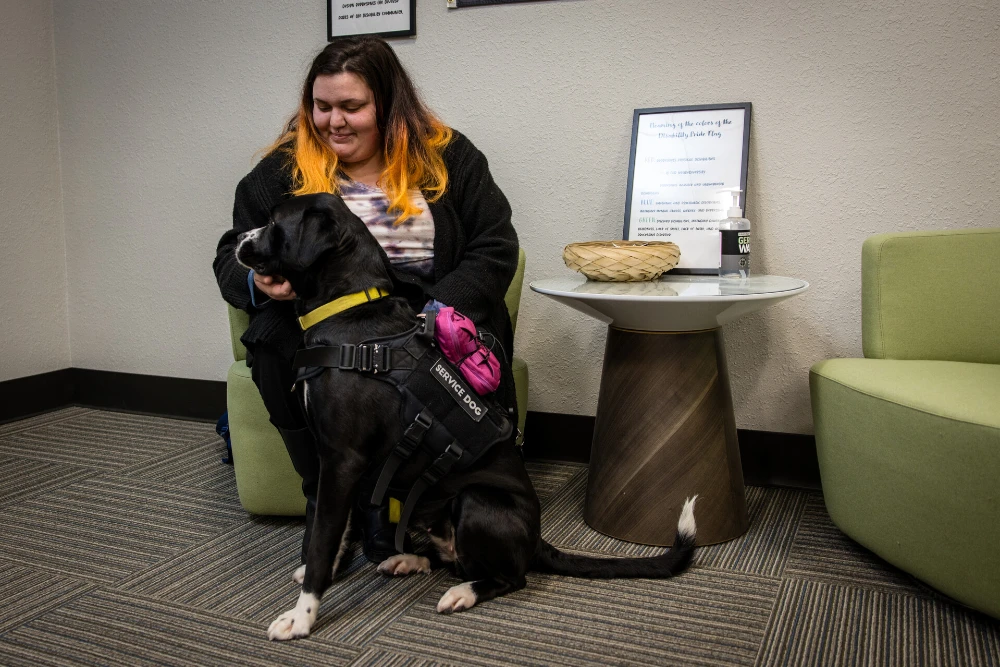
A Service Animal is any dog individually trained to do work or perform tasks for the benefits of an individual with a disability. Service animals are protected under ADA and federal policies.
While not mandatory, individuals bringing a Service animal to campus are strongly encouraged to partner with the Office of Title IX and Equity. Any individual planning on living on campus with a Service Animal should inform Housing and Residence Life that they plan to have a Service Animal with them in student housing.
To inquire about the presence of a Service Animal, it is reasonable for any University community member to ONLY ask the two following questions:
Service Animals are generally allowed inside areas of public accommodation including buildings, classrooms, residence halls, meeting areas, dining areas, recreational facilities, activities and events when the animal is accompanied by an individual with a disability who indicates the Service Animal is trained to provide, and does provide, a specific service to them that is necessary because of the individual's disability.
While service animals are generally allowed to go anywhere on campus that the handler is allowed to go, Service Animals may not be permitted in places where there is a health, environmental, or safety hazard, or where the Service Animal's presence fundamentally alters the nature of a University service or program. The following examples are areas of the University campus where access may be restricted:
Questions regarding areas that are off limits to Service Animals should be directed to the Office of Title IX and Equity. Exceptions may be granted in some circumstances.
| School/Department | Lab | Activity | Lab Director |
|---|---|---|---|
| Agricultural Sciences | Greenhouses | Possible exposure to pesticides and fertilizers | Director, School of Agricultural Sciences |
| Agricultural Sciences | Ag Mechanics lab-Thompson-Ringold | Welding, woodworking, machine shop | Director, School of Agricultural Sciences |
| Fine and Performing Arts | Design Studio | Woodworking | Chair, Fine & Performing Arts Department |
| Fine and Performing Arts | Sculpture Studio | Welding | Chair, Fine & Performing Arts Department |
| Fine and Performing Arts | Scene Shop | Welding, woodworking | Facility Manager, Ron Houston PAC |
| Health Science and Wellness |
Dietetics lab | Food preparation areas | Director, School of Health Science and Wellness |
| Humanities and Social Sciences | History lab/Academic Resource Center | Sign shop materials: cutting tools, heat press, etc. | Chair, Humanities and Social Sciences Department |
| Natural Sciences | Chemistry labs | Experiments, hazardous chemicals, etc. | Chair, Natural Sciences Department |
| Natural Sciences | Saw room | Sawing rocks and minerals, requires safety glasses, etc. | Chair, Natural Sciences Department |
| Natural Sciences | Biology labs | Experiments, hazardous chemicals, etc. | Chair, Natural Sciences Department |
| Education | Early Childhood Center kitchen | Food preparation | Director, Leet Early Childhood Center |
| School/Department | Lab | Activity | Lab Director |
|---|---|---|---|
| Maintenance shops and custodial closets | -- | -- | Director, Facility Services |
| Food service preparation areas | -- | -- | Director, Campus Dining Services |
To be granted an exception: A partner who wants her or his service dog to be granted admission to an off-limits area should contact ada@nwmissouri.edu.
Service Animals in Training is a dog in the control of a trainer and in the act of being individually trained to perform as a Service Animal. Any trainer of a service animal, while engaged in the training of such an animal, has the same rights, privileges and obligations as the Handler of a service animal with respect to access to public facilities as long as the animal is wearing a leash, harness or cape that identifies it as a Service Animal in Training. Anyone seeking to bring a Service Animal in Training to campus must contact the Office of Title IX and Equity.
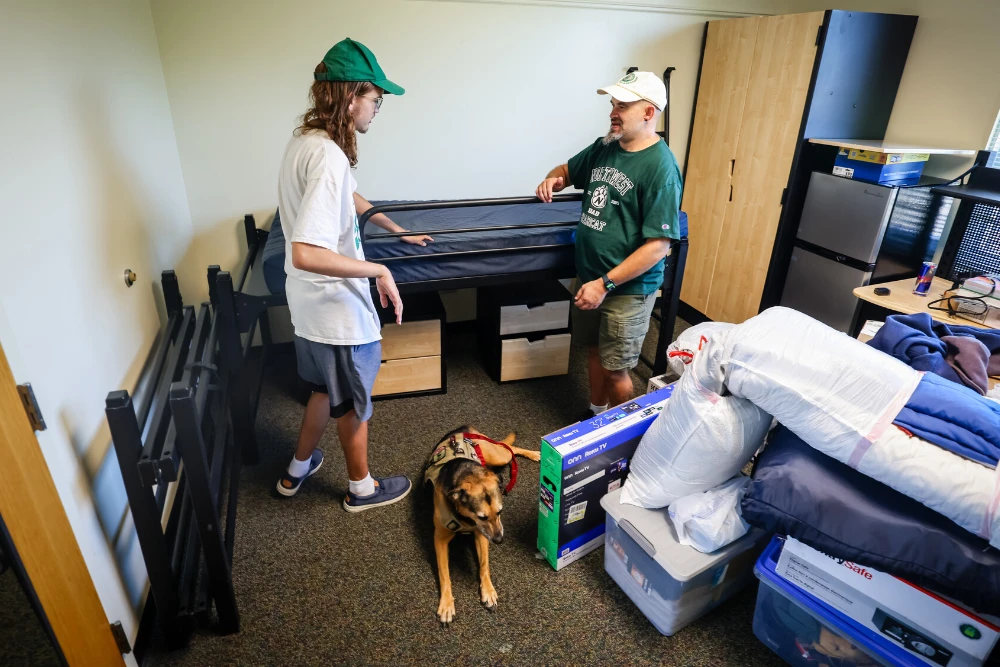
An Emotional Support Animal is a companion animal which provides therapeutic benefits, such as alleviating or mitigating symptoms of a person's disability. ESAs are not Service Animals. However, an ESA may be permitted on campus as a reasonable accommodation. Students seeking to bring ESAs on campus must follow the proper procedure for reasonable accommodations outlined in the Service and Emotional Support Animal Policy.
Emotional Support Animals are permitted in residential facilities if the animal is necessary to afford a student with a disability an equal opportunity to access and benefit from University housing, its presence in University housing is reasonable, and there is an identifiable relationship or nexus between the individual's disability and the assistance the animal provides.
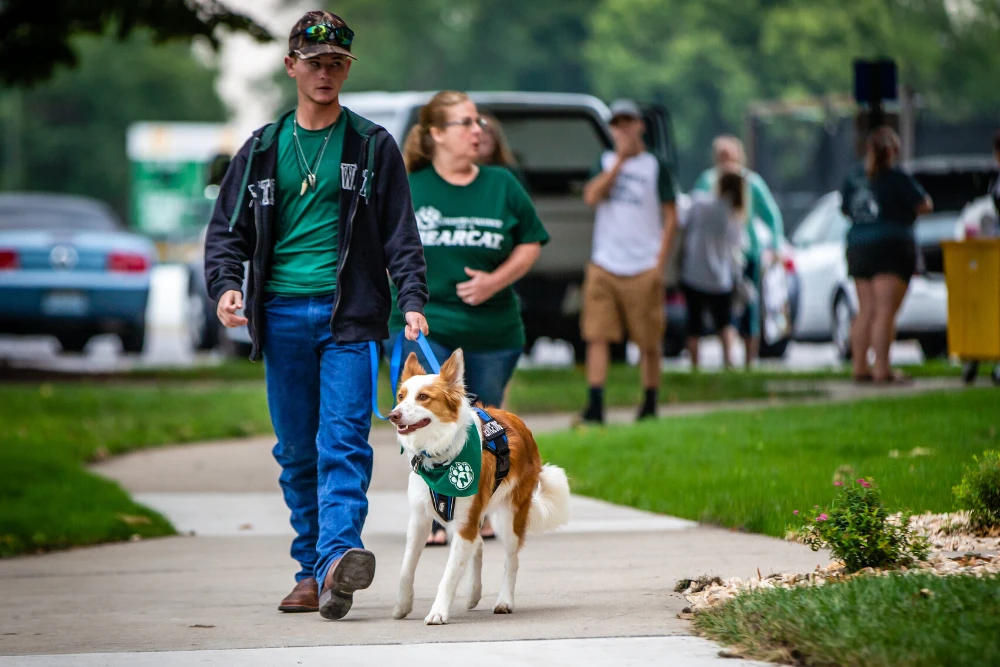
More information about the accommodation request process, visit:
You are encouraged to review the Service and Emotional Support Animal Policy.