Free MoveSpring App
We hope you will join the current fitness challenge using the free MoveSpring app.
Access the MoveSpring app by creating an account on app.movespring.com or by downloading the iOS or Android app.
- To join, check the latest HR Bulletin and follow the link. You will be prompted to the MoveSpring website or to download the mobile app.
- Follow the steps to create your MoveSpring account and connect a device.
- Once your account is created, you will automatically be added to the challenge.
Already have a MoveSpring account? Log in to your MoveSpring account and click the blue "+Join" button in the middle right side of the screen. You will then see the "Northwest Fall Movement" challenge as an option. Click "+" and then "Join."
Need help?
Check out the MoveSpring Help Center, how-to videos or contact their support team. To contact MoveSpring Support in the mobile app, tap the menu bar at the top left corner of the dashboard and then tap the green message support button at the bottom of the utility panel. On the web, click the blue chat icon at the bottom right of the screen. You also may contact the MoveSpring support team at help@movespring.com.
Looking for somewhere to work out?
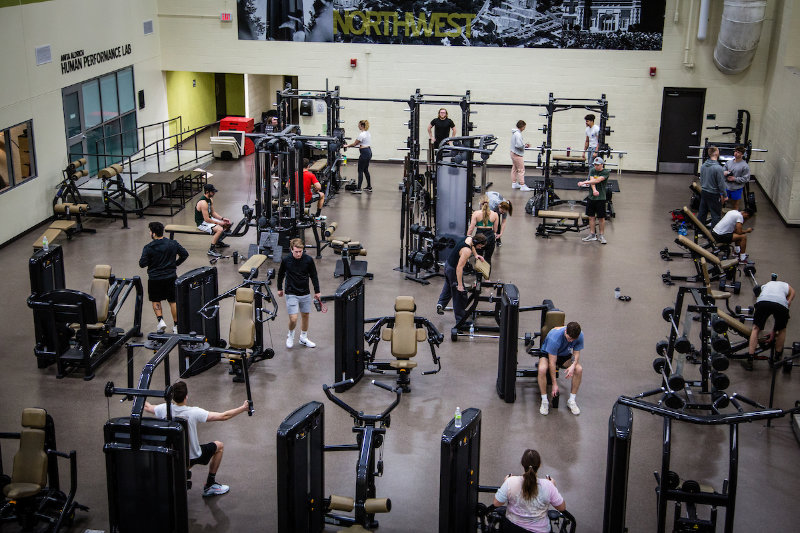
Membership to Hughes Fieldhouse and Foster Fitness Center are free for full-time employees and their spouses.
View Hours
New to the Foster Fitness Center? Take a guided tour around the space and learn about the equipment.
Foster Fitness Tour
Ergonomics
Workplace ergonomics: The science of designing workplace, keeping in mind the capabilities and limitations of the worker.
Goal: Reduce the stress and eliminate injuries associated with the overuse of certain muscles, poor posture and repetitive tasks.
Office Ergonomics 101:
- Sit less and move more. (Sedentary behavior is correlated to a reduction in health, while sedentary behavior with poor posture is correlated to an increase in injuries and health issues).
- Use proper posture
- Reduce strain on joints
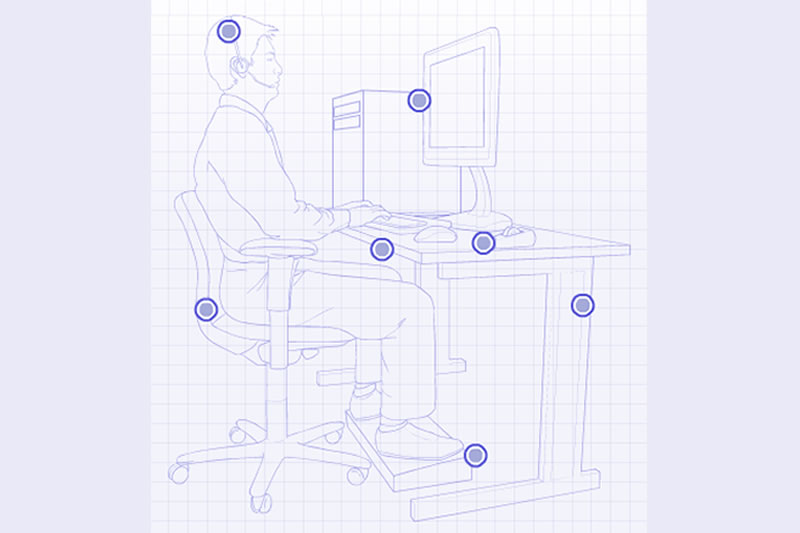
Key reference points in the study of ergonomics
- Chair: Knees should be level with your hips. Find a chair with lumbar support or place a cushion between the curve of your lower back and the chair.
- Feet: Use a foot stool if your feet do not touch the floor.
- Posture: Your body should be centered in front of the keyboard and monitor. Sit straight, with thighs horizontal, at the same level as your hips.
- Wrists: Use a wrist rest. While typing, hold hands and wrists above the wrist rest. Wrists should be straight, in a neutral position – not bent or up to the side while typing.
- Monitor Height: Your monitor should be directly in front of you at arms-length (18-28 inches). The top of the screen should be slightly below eye-level.
Additional ergonomic recommendations
- Take frequent breaks (every 20-40 minutes) for 3-5 minutes of movement
- Periodically change work positions: Stretch, tilt your chair, perform basic chair exercises
- Take 15 minute breaks every two hours
- Health application:
- Prolonged static posture inhibits blood flow; incorporate some stretching into your workday
- Looking at a monitor for long periods of time without moving fatigues muscles of the neck and shoulders
We will continue to learn more about ergonomics in the coming months
Ergonomic Basics. Be a Better Bearcat Presentation, 2016. Presented by Dr. Rhonda Beemer, PhD, ATC
 » Human Resources » Health & Wellness