Alternative fuels and recycling have been critical to Northwest's sustainability efforts for many, many years. SOAR Sustainability Presentation
By capturing recyclables and compost currently in Northwest's waste stream, the University could save as much as $50,000 a year in tipping fees.
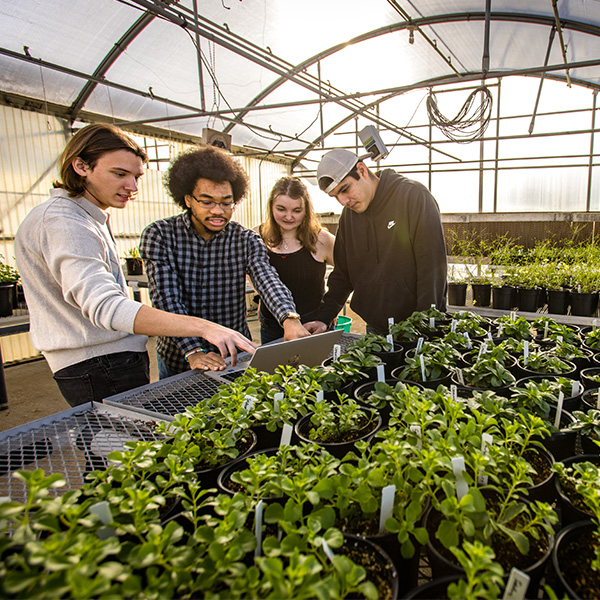
In 2011 Landscape Services staff built a wind row turner to further the University's composting efforts. In April, a compost test station was established in the campus Agriculture complex in a previously unused greenhouse. Faculty and students have been conduting studies to determine the best compost mix of food, animal waste, and yard waste from the arboretum. This fall, Northwest, in cooperation with ARAMARK Dining Services, will provide students the opportunity to collect recyclables and separate liquids and food waste from the trash in the Union Food Court.
In an effort to encourage and facilitate more recycling on campus, Landscape Services will be implementing a color-coding system for dumpsters on campus. Look for an updated, color-coded redesign for recycling stations in the Student Union to be introduced this fall.
In the month of March 2011, the Northwest campus generated 97 tons of solid waste. Recycling and composting collections diverted more than 28 tons of that waste from the landfill. That is a diversion rate of over 29%.
The University first began collecting wastepaper for conversion into alternative fuel for the power plant in 1993. Northwest has collected over 50 tons of paper at its Pellet Plant location this year (Country Club and Northwest Drive). In total, the University has collected over 700 tons of paper from around the community for alternative fuel pellet production.
City-wide glass collection has diverted more than 8 tons of waste from the landfill so far this year.
Since 2006, the use of alternative fuels (wood chips, paper and waste pellets) has saved the University an average of $800,000 per year for steam generation.
In 2010, Landscape Services designed and built equipment to more effectively seal the asphalt parking lots, extending their useful service life. (It is estimated that regularly scheduled seal-coating a 100,000 square foot asphalt lot can save as much as $10,000 per year in replacement costs.) http://www.thelandlordtimes.com/?q=content/extend-lifecycle-asphalt-pavement
During academic year 2009-2010, 71% of the power plant's steam production was generated by alternative fuels. Alternative fuel energy represents 47% of Northwest's total campus-wide energy consumption. (MmBtu of electricity, natural gas, and alternative fuels [112,328~, 62,593NG, 154,310AF]).
Starting in 2004 Northwest has participated in Recyclemania! program. Over 6 million college and university students from across the nation compete and work to promote recycling.
Between July and December 2010, more than 3 tons of glass, plastic, and aluminum were collected for recycling.
Starting in 2010, Environmental Services Facilities Operations personnel began re-lamping campus lighting fixtures. The ongoing process involves evaluating each fixture, repair and replacement of necessary components, and the installation of the most efficient lamps available.